When asking, “what are the advantages of steel framing,” look beyond simple claims about strength. Steel framing can create straight walls, consistent dimensions, and reliable structural performance. On an active job site, those benefits are visible. Studs arrive uniform, corners align cleanly, and openings need fewer corrections. That precision can reduce material waste and help crews maintain predictable schedules.
Steel also resists termites, rot, and many forms of biological damage. It does not burn like timber. Its high strength-to-weight ratio can support open floor plans, taller walls, and demanding architectural shapes. Steel is also highly recyclable, which supports more responsible material planning. Larry Williams, a former executive director of the Steel Framing Alliance, described the material’s value this way: “Steel framing offers strength, durability, and design flexibility.” That statement remains useful, but it needs context.
Steel is not automatically the best choice.
Thermal bridging can reduce energy performance when insulation and connection details are poorly designed. Moisture control still matters, especially around exterior sheathing and penetrations. Skilled installation is essential. Costs may also vary with regional supply, labor availability, and project complexity. These limitations should not be hidden. They are part of an honest evaluation.
This guide examines where steel framing performs well, where it requires careful detailing, and how experienced builders use it in practice. The goal is practical clarity, not exaggerated certainty.
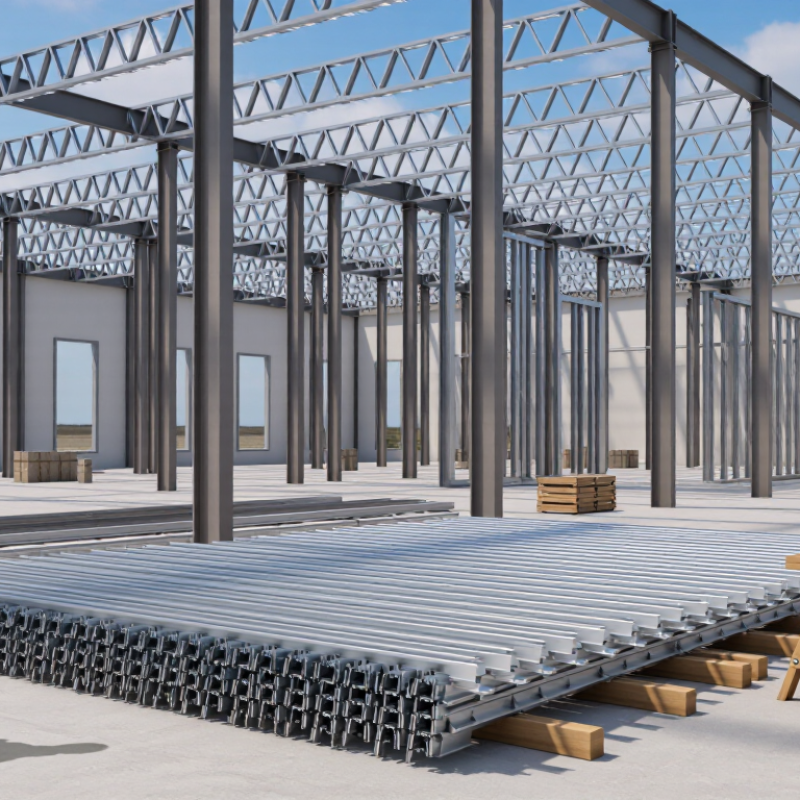
Steel framing delivers a strong structural system without excessive dead weight. A common 50 ksi yield strength means the steel can resist substantial stress before permanent deformation begins. In practical terms, a lighter frame can support longer spans, reduce column sizes, and create more usable floor space. The American Institute of Steel Construction’s Steel Construction Manual identifies 50 ksi as a common yield strength for modern structural shapes. That figure is important, but it is not the whole design story.
Engineers still check buckling, connections, corrosion exposure, and fire performance. A 50 ksi member may appear efficient on paper, yet poor bracing can reduce its real capacity. This is where experience matters. On site, accurate fabrication and tight bolt alignment often influence performance as much as material strength. Designers should also compare the frame’s total weight, not only individual member strength. The lighter option is not always the lowest-cost option.
Tips: Confirm the specified steel grade before fabrication. Review mill certificates and connection drawings. Ask whether the design uses gross strength, buckling resistance, or both. AISC 360-22 and the American Iron and Steel Institute’s cold-formed steel provisions provide reliable technical references. These documents support consistent calculations, but field conditions still deserve careful review. Small coordination errors can become expensive.
It means the steel can resist substantial stress before permanent deformation begins. The number matters. It does not tell the whole design story.
A lighter frame may support longer spans and smaller columns. This can create more usable floor space. The lightest option may not be the cheapest.
Engineers should check buckling, connections, corrosion exposure, and fire performance. Weak bracing can reduce a member’s real capacity. Paper strength is not enough.
Accurate fabrication and tight bolt alignment help the structure perform as intended. Small coordination errors can become expensive. Site conditions deserve honest review.
No. The complete tested assembly must meet the required rating. Gypsum layers, insulation, fasteners, joints, and load-bearing members all matter.
Some tested wall and floor assemblies can provide protection for up to three hours. This rating applies only to the tested configuration. A similar-looking wall may perform differently.
Missing screws, damaged boards, and poorly sealed joints can break barrier continuity. A small gap around a service pipe matters. Inspections should check every penetration.
More than 90% of structural steel is recycled in North America. Recovery depends on dismantling, sorting, transport, and local facilities. Recycling is valuable, but not impact-free.
Sometimes, but engineers must inspect and verify each member. Accessible connections and clear material records can help. Reuse sounds simple; it rarely is.
Steel framing offers a compelling combination of strength, stability, safety, and efficiency. With yield strengths reaching up to 50 ksi, steel can support substantial loads while keeping structural components relatively lightweight. Its consistent dimensions and compliance with ASTM tolerances help reduce warping, shrinkage, and settlement, making it easier to achieve reliable results throughout a building’s life.
For those asking what are the advantages of steel framing, fire performance and construction speed are also important considerations. Steel is noncombustible, and properly designed assemblies can provide fire ratings of up to three hours. Prefabricated components can shorten on-site work and reduce construction waste, while steel’s recyclability supports more sustainable building practices: more than 90% of structural steel in North America is recycled.

 Terra Steel