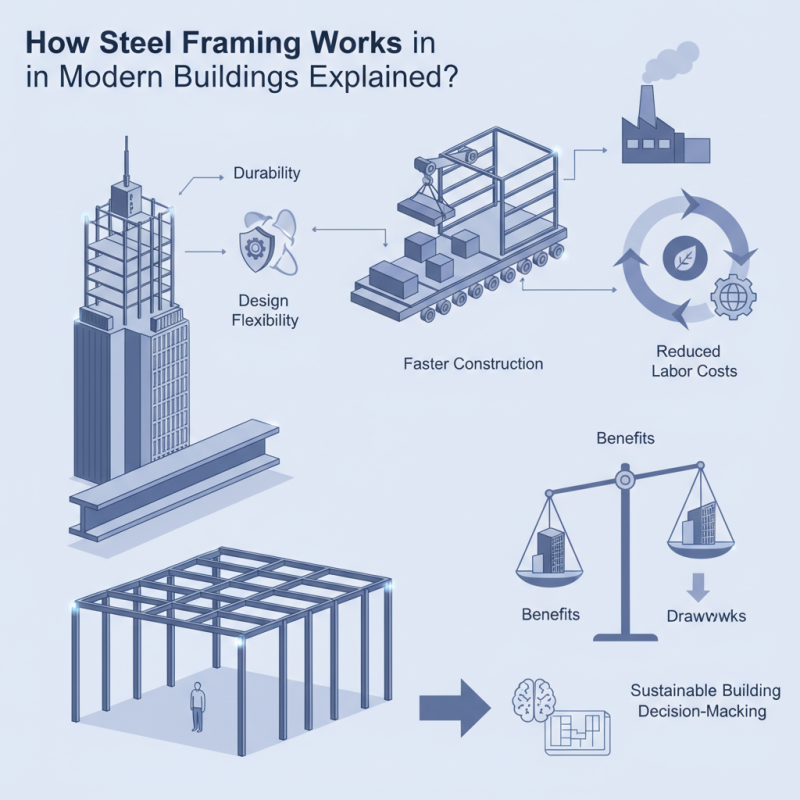
Steel framing has transformed modern architecture. Understanding how steel framing works in modern buildings is essential for architects and builders alike. This construction method offers numerous advantages, such as durability and flexibility in design. Each steel frame can bear heavy loads, allowing for spacious interiors.
In recent years, technology has advanced, making steel framing even more efficient. Prefabricated components speed up the construction process. This allows for quicker project completion and reduced labor costs. However, the reliance on steel also raises concerns. How does sourcing and manufacturing steel impact the environment?
In exploring how steel framing works in modern buildings, we must consider both the benefits and potential drawbacks. This balance is crucial for sustainable building practices. Understanding these aspects leads to better decision-making in the construction industry.
The Basics of Steel Framing in Modern Construction
Steel framing plays a crucial role in modern construction. It offers durability and strength that traditional materials like wood cannot match. A report from the American Institute of Steel Construction (AISC) indicates that steel can withstand various environmental challenges, making it ideal for diverse climates. It is a lightweight option, which helps reduce the overall building load and foundation costs.
In cities across the globe, about 40% of new commercial buildings utilize steel framing. This statistic reflects a growing trend towards efficiency and sustainability. Steel's recyclability adds to its appeal, with reports stating that nearly 90% of steel is recycled at the end of its life cycle. However, some challenges persist. Issues like corrosion must be managed effectively to ensure the longevity of steel structures. Proper maintenance strategies are essential.
Interestingly, the speed of construction with steel framing offers a competitive edge. Buildings can often be erected rapidly, minimizing downtime. Despite this, the initial costs can be higher than traditional materials, which may deter some builders. However, the long-term benefits often outweigh these initial investments. Balancing cost, efficiency, and sustainability remains a critical task for industry professionals.
Key Advantages of Using Steel Framing Over Traditional Materials
Steel framing has become increasingly popular in modern construction due to its numerous advantages over traditional materials. One key benefit is its strength-to-weight ratio. Steel is remarkably lightweight yet incredibly strong. This allows for taller structures and greater spans without the need for excessive supporting columns. Additionally, steel does not warp, twist, or shrink, providing stability and durability.
Another significant advantage of steel framing is its resistance to pests and fire. Wood is susceptible to termites and rot, while steel remains unaffected. This can lead to lower maintenance costs over the building's lifespan. However, steel structures can be prone to corrosion in certain environments if not properly treated. It's crucial for builders to use the right coatings to ensure longevity.
Steel framing also offers flexibility in design. Structures can be easily modified or expanded as needs change. This adaptability is particularly important in urban areas, where space is limited. Yet, relying on steel requires skilled labor and experience. Proper installation is vital to maximize the benefits. While steel framing leads to efficient construction processes, it also necessitates thorough planning and expertise.
The Structural Components of Steel Framing Systems
Steel framing systems are composed of several key structural components. The primary elements include steel columns, beams, and studs. These components work together to create a robust framework for various types of buildings. In modern architecture, steel frames are highly regarded for their strength and flexibility. They can support heavy loads while allowing for open interior spaces.
Columns are vertical supports that distribute weight from the roof and floors. Beams span horizontal distances and transfer loads to the columns. Steel studs, often used in walls, provide vertical support. They can be spaced at regular intervals, offering design flexibility. One might think these components are straightforward. However, the connections between them require meticulous engineering.
An important consideration in steel framing is the potential for corrosion over time. Steel is durable, but exposure to moisture can weaken its integrity. Proper treatment and maintenance are crucial. Designers must also consider thermal expansion. Changes in temperature can affect the connection points, which may weaken the structure. This aspect necessitates careful planning and engineering foresight.
Steel Framing Systems: Structural Components
The Construction Process of Steel Framing in Buildings
Steel framing has transformed modern construction, becoming a preferred method for many buildings. In this construction process, steel beams, columns, and studs are used to create a framework that provides strength and stability. According to the American Institute of Steel Construction, about 70% of multi-story buildings now use steel framing. This method allows for lighter structures, essential in urban environments where weight restrictions can be a concern.
The construction process begins with careful planning and design. Engineers assess the environmental conditions and desired building height. Prefabricated steel components are often manufactured off-site. This efficiency reduces construction time. However, relying too much on prefabricated sections can lead to challenges on-site, such as fitting them perfectly together. Furthermore, steel must be treated against corrosion, adding complexity to the project.
During assembly, teams work to ensure precision in every joint. Misalignment can lead to structural issues later. Although steel framing is resilient against many forces, unexpected incidents may occur. For instance, the heat from fire can compromise steel's integrity. Understanding these risks is essential for safe construction. Continuous training for workers is necessary to address evolving challenges in steel framing.
Future Trends and Innovations in Steel Framing Technology
Steel framing technology is evolving rapidly. Modern buildings increasingly leverage innovations in this area. One significant trend is the use of advanced materials. These materials offer enhanced strength and durability. Steel can be engineered to be lighter and more resilient. This not only reduces costs but also minimizes environmental impact.
Another exciting development is modular construction. This approach allows for off-site fabrication of steel components. Assembling these parts on-site significantly speeds up the construction process. It also lowers labor risks and improves site safety. However, challenges remain. The coordination between manufacturing and construction can be complex.
Additionally, sustainable practices are gaining momentum. Recycled steel is becoming a preferred choice in many projects. This shift aligns with growing environmental concerns in construction. Companies are also exploring digital tools. Virtual modeling and AI help optimize designs and streamline processes. While these trends are promising, the industry must address issues like availability and scalability. Balancing innovation with practicality is key to success.
How Steel Framing Works in Modern Buildings Explained? - Future Trends and Innovations in Steel Framing Technology
| Dimension |
Description |
Current Use |
Future Trends |
| Material Strength |
Steel's tensile and compressive strength allows for thinner walls. |
Commercial and residential buildings. |
Advanced steel alloys for lighter and stronger frames. |
| Seismic Performance |
Flexibility to withstand earthquakes. |
High seismic zones like California. |
Smart materials that adapt to seismic activity. |
| Speed of Construction |
Pre-fabricated components minimize on-site work. |
Fast-track projects worldwide. |
Increased automation and robotics in assembly. |
| Sustainability |
Recyclable materials reduce environmental impact. |
Eco-friendly buildings. |
Innovative recycling processes and circular economy applications. |
| Insulation |
Thin steel frames allow integration of advanced insulation methods. |
Residential and commercial sectors. |
Smart insulation materials that adjust based on temperature. |
Conclusion
Steel framing has become a fundamental component in modern construction, revolutionizing how buildings are designed and built. Understanding how steel framing works in modern buildings involves recognizing its key advantages over traditional materials, such as enhanced durability, improved design flexibility, and resistance to environmental factors. Steel framing systems consist of various structural components, including columns, beams, and studs, which work together to create strong and stable structures.
The construction process of steel framing is efficient, allowing for quicker assembly and reduced labor costs, while the lightweight nature of steel facilitates easy transportation and installation. As technology evolves, future trends in steel framing are likely to focus on innovations that improve sustainability, energy efficiency, and the integration of smart building technologies, further enhancing the relevance of steel framing in contemporary architecture.

 Terra Steel