In construction, connecting steel sections is a critical task that demands precision and skill. Knowing how to connect steel sections in construction can significantly affect the overall integrity and durability of a structure. Different methods exist, each with its own benefits and limitations.
Experience plays a vital role in selecting the right connection technique. Welded, bolted, and riveted connections are common choices, but each has specific requirements. For instance, welding requires skillful application to avoid weaknesses in the steel. Bolted connections offer flexibility, yet their installation must be checked for torque specifications.
While it is essential to follow standard practices, there are moments where improvisation may come into play. This approach risks structural integrity, emphasizing the need for meticulous planning. Reflecting on past projects can highlight areas needing improvement, ensuring future connections are reliable and sturdy.
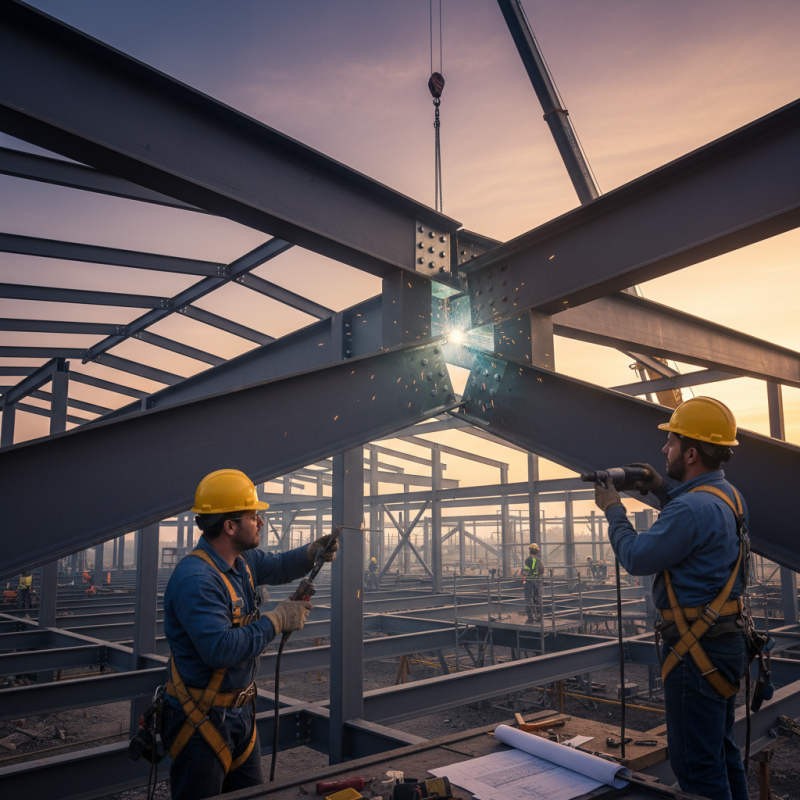
In construction, the choice of steel sections is crucial. Different types cater to various structural needs. Commonly used sections include I-beams, H-beams, and angle sections. I-beams are popular for their high strength-to-weight ratio. They are often employed in beams and columns. H-beams offer more stability and can handle heavier loads.
Angle sections are versatile. They come in equal or unequal dimensions, making them useful for bracing and supports. Steel plates and channels are also prevalent. Channels perform well in bending, while plates provide a solid base for connections. Each type serves specific functions in construction projects.
Challenges may arise in selecting the appropriate sections. Understanding load requirements and architectural design is essential. Designers must reflect on these factors carefully. Different sections may complicate the assembly process. Correctly aligning sections can be difficult. Ensuring proper connections is vital for structural integrity.
| Steel Section Type | Common Uses | Connection Methods | Advantages | Disadvantages |
|---|---|---|---|---|
| I-Beam | Support beams, columns in buildings | Welding, bolting | High strength, good load bearing | Weight can be a concern |
| C-channel | Bracing, structural support | Bolting, screwing | Cost-effective, easy installation | Limited load capacity |
| Angle | Framework, bracing | Welding, bolting | Versatile, strong connections | May require additional support |
| Hollow Steel Section (HSS) | Columns, structural frames | Welding | Aesthetic, uniform strength | Welding can be challenging |
| T-section | Bracing, construction frames | Welding, bolting | Resistant to bending | Less efficient for load distribution |
: Effective connections ensure stability and longevity. They transfer forces properly between different sections.
Weak connections can lead to structural failures. This can pose significant safety risks.
Common types include welded, bolted, and riveted connections. Each has unique characteristics and trade-offs.
Bolted connections allow for easier assembly and adjustments. This can simplify construction processes.
Clean surfaces improve contact quality. This enhances the reliability and strength of connections.
Overheating can weaken steel and create stress points. This may lead to failures under load.
Regular inspections catch cracks and gaps early. Imperfections can significantly compromise connection strength.
Redundancy distributes stress more evenly across connections. This can prevent catastrophic failures.
Contractors must balance simplicity with safety. This complexity affects overall project costs and effectiveness.
A deep understanding of stress points and load paths is crucial. Designers must consider all factors carefully.
In construction, knowing how to connect steel sections effectively is crucial for ensuring structural integrity and safety. This process begins with an understanding of the various types of steel sections commonly used, which can influence connection design. Effective connections are vital, and there are two primary methods for achieving this: bolting and welding, each with its own advantages and applications.
When designing steel connections, several factors must be considered, including load requirements, environmental conditions, and the materials used. To ensure connection integrity and strength, adherence to best practices is essential, such as proper alignment, adequate welding techniques, and sufficient bolting specifications. By following these guidelines, construction professionals can achieve robust and reliable connections that meet both safety standards and project requirements.

 Terra Steel